Overview of Beirut
Beirut is the vibrant capital of Lebanon and one of the Middle East’s most dynamic and culturally rich cities. Located along the eastern Mediterranean coast, Beirut is renowned for its fascinating history, lively nightlife, diverse architecture, world-class cuisine, and thriving arts scene. Often referred to as the “Paris of the Middle East,” the city blends ancient heritage with modern sophistication, offering visitors an unforgettable travel experience.
As Lebanon’s political, economic, and cultural center, Beirut is a city where Roman ruins stand beside Ottoman-era buildings, French colonial architecture, contemporary skyscrapers, and bustling waterfront promenades. Visitors can explore historic neighborhoods, museums, traditional souks, seaside attractions, and vibrant cafés while experiencing the city’s warm hospitality and cosmopolitan atmosphere.
Unlike many modern capitals, Beirut combines thousands of years of history with a youthful energy that makes it one of the region’s most exciting destinations. From historic landmarks and cultural institutions to beaches, nightlife, and culinary experiences, Beirut offers something for every traveler.
History & Cultural Significance of Beirut
Beirut is one of the world’s oldest continuously inhabited cities, with a history spanning more than 5,000 years. Throughout its long history, the city has been ruled by the Phoenicians, Romans, Byzantines, Arabs, Crusaders, Ottomans, and the French, each leaving a lasting influence on its architecture, culture, and identity.
Known as Berytus during the Roman era, Beirut became one of the empire’s most important centers for law and education. Over the centuries, it developed into a major Mediterranean port connecting Europe, Asia, and Africa through trade and cultural exchange.
Following Lebanon’s independence in 1943, Beirut emerged as a leading financial, educational, and cultural hub in the Middle East. Although the city experienced significant challenges during the Lebanese Civil War and subsequent conflicts, Beirut has demonstrated remarkable resilience, rebuilding many of its neighborhoods while preserving its multicultural character.
Today, Beirut remains the heart of Lebanese culture, celebrated for its diversity, creativity, literature, music, architecture, and exceptional hospitality.
Best Time to Visit Beirut
The best time to visit Beirut is from April to June and September to November, when pleasant temperatures make sightseeing, walking tours, beach visits, and outdoor dining especially enjoyable.
Beirut Weather Guide
Spring (March–May): Mild temperatures (15°C–25°C), ideal for sightseeing, cultural attractions, and outdoor cafés.
Summer (June–August): Warm temperatures (25°C–33°C), perfect for beaches, nightlife, and Mediterranean cruises.
Autumn (September–November): Comfortable temperatures (18°C–28°C), excellent for exploring historic neighborhoods and coastal attractions.
Winter (December–February): Cool temperatures (10°C–18°C), with occasional rainfall. Snow can be found in Lebanon’s nearby mountain resorts.
Festivals and Events to Experience
Beirut hosts numerous cultural and entertainment events throughout the year, including:
- Beirut International Film Festival
- Beirut Art Fair
- Beirut Marathon
- Beirut Design Week
- Lebanese Food Festivals
- Music concerts and cultural performances
- Christmas and New Year celebrations
- Traditional Lebanese cultural events
These festivals showcase Lebanon’s vibrant arts, music, cuisine, fashion, and creative industries.
15 Best Places to Visit in Beirut
Beirut Corniche
A beautiful waterfront promenade stretching along the Mediterranean Sea, perfect for walking, jogging, cycling, and enjoying spectacular sunsets.
Pigeon Rocks (Raouché)
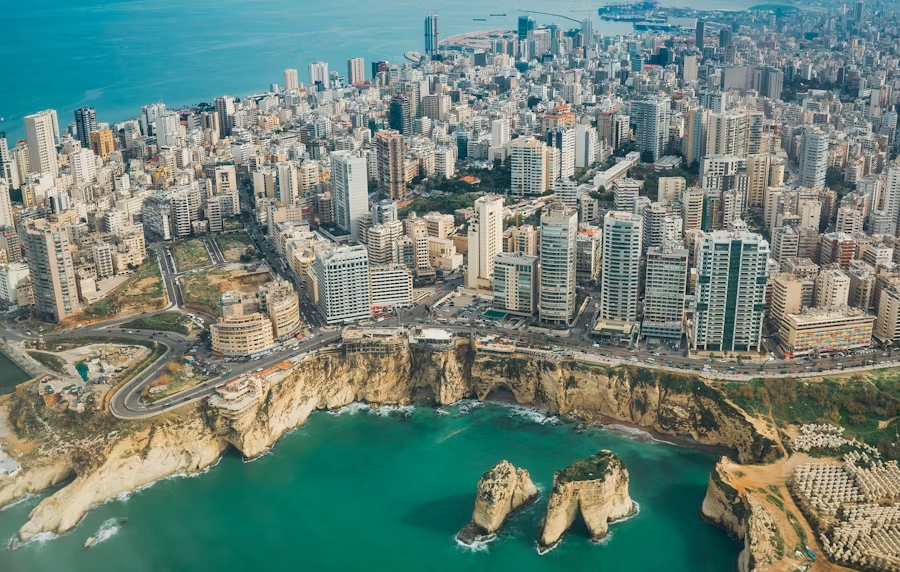
One of Beirut’s most iconic natural landmarks, these massive limestone sea stacks rise dramatically from the Mediterranean and are especially beautiful at sunset.
National Museum of Beirut
Lebanon’s premier archaeological museum, featuring thousands of artifacts that tell the story of the country’s ancient civilizations.
Downtown Beirut
A beautifully restored district featuring historic buildings, luxury shopping, public squares, cafés, restaurants, and cultural attractions.
Mohammad Al-Amin Mosque
A magnificent blue-domed mosque that has become one of Beirut’s most recognizable architectural landmarks.
Saint George Greek Orthodox Cathedral
One of Beirut’s oldest churches, reflecting centuries of Christian heritage and impressive religious architecture.
Roman Baths
Ancient Roman archaeological remains located in downtown Beirut, offering a glimpse into the city’s classical past.
Beirut Souks
A modern shopping district combining luxury boutiques, international brands, restaurants, and entertainment venues.
Gemmayzeh
A lively neighborhood known for its historic buildings, art galleries, cafés, restaurants, and vibrant nightlife.
Mar Mikhael
One of Beirut’s trendiest districts, famous for boutique shops, street art, creative spaces, and popular dining venues.
Sursock Museum
A leading contemporary and modern art museum housed in a beautifully restored historic mansion.
Zaitunay Bay
A stylish waterfront marina featuring luxury yachts, fine dining restaurants, cafés, and scenic Mediterranean views.
Hamra Street
A bustling commercial district known for shopping, bookstores, universities, restaurants, and lively street life.
Beirut Waterfront
A modern seaside development offering walking paths, recreational areas, luxury hotels, and panoramic coastal views.
Jeita Grotto (Nearby Attraction)
Located just outside Beirut, this spectacular limestone cave system is one of Lebanon’s most famous natural attractions and makes an excellent day trip.
Things to Do in Beirut
Unique Experiences in Beirut
- Walk along the scenic Beirut Corniche.
- Watch the sunset at Pigeon Rocks.
- Explore ancient Roman archaeological sites.
- Visit museums showcasing Lebanon’s rich history.
- Discover vibrant neighborhoods like Gemmayzeh and Mar Mikhael.
- Enjoy authentic Lebanese cuisine.
- Experience Beirut’s renowned nightlife.
What to Do in Beirut
- Visit historical and religious landmarks.
- Explore museums and cultural institutions.
- Shop at Beirut Souks and local markets.
- Relax at seaside cafés.
- Enjoy Mediterranean dining experiences.
- Take day trips to nearby mountains, wineries, and historic towns.
- Discover Lebanon’s art and music scene.
Fun Things to Do with Family, Couples & Friends
- Enjoy an evening walk along the Corniche.
- Take memorable photos at Pigeon Rocks.
- Visit museums and historical attractions.
- Experience Lebanese street food.
- Spend time at Zaitunay Bay.
- Explore local cafés and art galleries.
- Shop for traditional souvenirs.
- Enjoy Beirut’s vibrant nightlife and entertainment.
Conclusion
Beirut is one of the Middle East’s most captivating destinations, offering an exceptional blend of ancient history, Mediterranean beauty, rich culture, and modern urban life. From its archaeological treasures and historic neighborhoods to its lively cafés, world-famous cuisine, and scenic coastline, the Lebanese capital provides unforgettable experiences for every traveler.
Whether you are planning a cultural getaway, a culinary adventure, a beach holiday, or a city break, Beirut offers a unique introduction to Lebanon’s heritage and hospitality. With its resilient spirit, welcoming atmosphere, and remarkable diversity, Beirut continues to stand as one of the Mediterranean’s most fascinating and rewarding destinations.